

Preamble
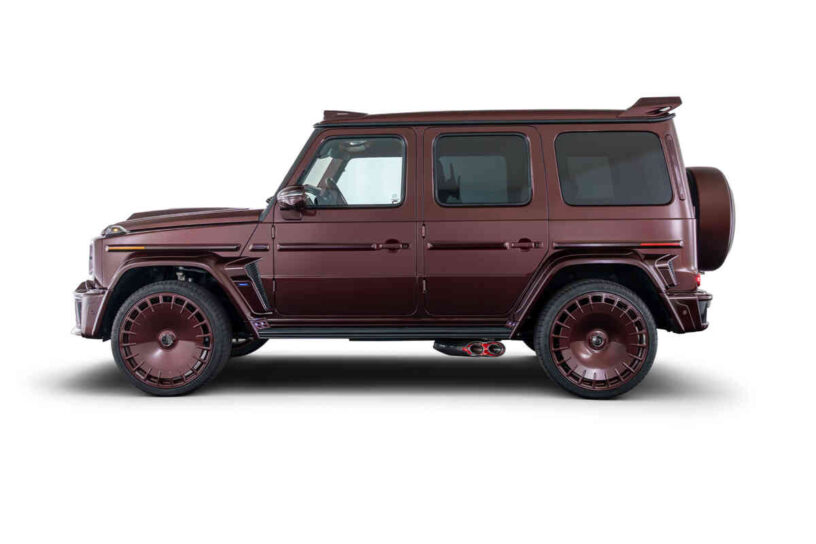
Brabus GmbH, founded in 1977 in Bottrop, Germany, has become one of the most respected names in the world of high-performance automotive tuning. The company was established with the vision of transforming Mercedes-Benz vehicles into machines that combine extraordinary power, refined luxury, and distinctive design.
Among its many projects, the Mercedes G-Class, particularly the G63 AMG, stands as the company’s most iconic and best-selling model. The Brabus G-Wagon has become a status symbol across Europe and beyond, admired for its imposing presence and unrivaled performance.
Transforming a G-Wagon through Brabus is far from a modest investment. The process can begin with aesthetic enhancements, such as body kits, and extend to a complete reinterpretation of the vehicle. Every aspect may be reimagined, from aerodynamics and exhaust systems to engine performance and horsepower. Depending on the extent of the modifications, the final cost can easily double, or even exceed, the original purchase price of the car.
This article focuses on the European market, aiming to identify the countries where Brabus-modified G-Wagons are most commonly found. The goal is to establish a top ten ranking of nations with the highest density of these vehicles.
It is important to note that this ranking is based on estimations rather than official registration data. Brabus does not publish figures on its elaborations, making it impossible to determine exact numbers for each country. Instead, the analysis relies on various indicators gathered from multiple sources.

1. Germany
Germany sits at the top of the ranking for one clear reason: it’s the home of Brabus. The company’s headquarters and its biggest network of official showrooms are based in Bottrop, which naturally makes the country the place with the highest concentration of Brabus G-Wagon models in Europe.
As the largest Mercedes market in the continent, Germany consistently records the highest number of new Mercedes registrations every year. That strong automotive culture, combined with business-friendly tax rules, makes powerful SUVs even more appealing. Companies benefit from generous deductions when registering heavy vehicles as corporate cars, making high-end models like the G-Wagon or a Brabus-tuned version easier for executives to justify.
Being the country of manufacture also keeps costs down. Buyers avoid import duties and face lower logistical expenses, so even though high-powered engines still come with taxes, the overall price remains among the most competitive worldwide.
Add to that Germany’s high concentration of wealthy individuals, and it’s easy to see why the Brabus G-Wagon has become such a common sight on German roads.

2. Switzerland
Switzerland ranks high thanks to its exceptional per-capita wealth and its long-standing love for premium and exotic cars. It’s one of the European countries where Brabus models, especially the Brabus G-Wagon appear most frequently in dealership inventories and high-end listings.
The country’s reputation as a neutral and tax-efficient hub also plays a big role. Switzerland attracts wealthy residents, expatriates, and even foreign buyers who choose to register their luxury vehicles there for financial or residency advantages. This creates a strong market for exclusive SUVs and custom performance brands like Brabus.
And while the G-Wagon might seem excessive on paper, Switzerland’s alpine environment makes all-wheel-drive vehicles genuinely useful. Between winter snow, steep mountain roads, and remote chalets, a powerful luxury SUV offers both prestige and practicality: a combination that perfectly fits Swiss tastes

3. Ukraine
Ukraine’s high position in this ranking may seem unexpected at first, but the G-Class has long held a special status in the country. Well before it became a fashionable luxury SUV across Western Europe, the G-Wagon was already established in Ukraine as a symbol of authority, durability and influence. For wealthy business figures, politically connected individuals and foreign operators, it was never just a car, but a statement.
Security has always played a role. Large, imposing SUVs often armored or heavily customized, have traditionally been preferred, and Brabus versions of the G-Class naturally fit this niche. As a result, Brabus G-Wagons are a familiar sight in major cities like Kyiv and Lviv, appearing far more frequently than national income figures alone would suggest.
Ukraine also benefits from a well-developed local network of dealers and tuners, making Brabus conversions and maintenance possible without relying solely on third-country imports. This has encouraged repeat ownership and bespoke builds rather than one-off purchases. Add to this the country’s proximity to Russia and its role as a regional crossroads for wealthy businessmen, and Ukraine has often served as both a destination and a transit point for high-end G-Classes.
The result is a surprisingly dense concentration of Brabus G-Wagons on Ukrainian roads, securing the country a solid third place in Europe — ahead of several markets that appear stronger on paper, but lack the same long-standing G-Class culture.

4. Russia
Russia has long been one of the most iconic markets for the Brabus G-Wagon, largely thanks to the vehicle’s strong association with wealth, exclusivity, and power. For decades, the G-Class and especially Brabus-tuned versions, became the go-to choice for the country’s business elite, celebrities, and high-profile individuals. Its rugged, military-inspired design fits perfectly with the bold aesthetic often favored by Russia’s luxury car enthusiasts.
Major cities like Moscow and St. Petersburg host a notable concentration of ultra-high-net-worth individuals, which continues to drive demand for rare and high-performance SUVs. Even though the average national income is lower than in Western Europe, the top tier of buyers in Russia remains extremely active in the luxury automotive market.
Historically, high import duties and luxury taxes pushed the price of the G-Class even higher, ironically strengthening its appeal as a status symbol. The more expensive it was, the more exclusive it became. Today, international sanctions have complicated official imports, which encourages some buyers to rely on grey-market channels through neighboring countries.
Owning a Brabus G-Wagon in Russia is currently more costly and logistically challenging than in previous years. Yet for the wealthiest individuals, the price remains a secondary concern — availability is the bigger issue. As a result, part of this elite buyer base now prefers to keep or register their luxury vehicles abroad, where regulations and import conditions are more predictable and convenient.

5. United Kingdom
The United Kingdom has one of Europe’s strongest luxury SUV markets, and that includes a vibrant scene for Brabus models. Several Brabus-approved and specialist dealers operate across the country… especially in London and the South-East, making it easy for buyers to find or commission a Brabus G-Wagon. The UK’s long-standing passion for aftermarket tuning also fuels demand, with countless G63 conversions regularly appearing in classifieds, dealerships, and automotive press features.
Interest in the G-Class surged in 2019 with the release of the updated G63, and ever since, the Brabus-tuned versions have become a symbol of status in British pop culture. In London’s wealthiest boroughs, the density of Brabus G-Wagons is particularly striking, largely thanks to their popularity among celebrities, high-net-worth entrepreneurs, and Premier League footballers.
Until recent changes in fiscal rules, the UK was also a major destination for global millionaires and billionaires seeking favorable tax treatment on foreign income. This attracted wealthy residents from the Middle East and beyond, many of whom brought their supercars, including Brabus G-Wagons to the streets of London during the summer season. The result is a uniquely visible and diverse concentration of these high-performance SUVs.

6. Poland
Poland has seen rapid economic growth in recent years, giving rise to a growing class of self-made millionaires and a booming luxury car market. Among these buyers, the Brabus G-Wagon has become a symbol of success and prestige, perfectly suited to showcase wealth and status.
The country applies an excise tax on passenger cars with engines over 2.0L ( currently 18.6%) which makes high-performance SUVs like the Brabus G-Wagon significantly more expensive. Despite this, Poland remains one of the more accessible markets for luxury vehicles in Eastern and Central Europe, particularly compared to neighboring countries with higher taxes and import duties.
Polish buyers in the premium segment tend to be more value-conscious than their Western counterparts, often weighing cost against utility rather than purchasing solely for status. Administrative hurdles, excise duties, and registration rules for imported vehicles further limit the market.
Still, Poland is emerging as a leader among Eastern European countries for high-end SUVs and supercars. Analysts expect the country’s presence in the Brabus G-Wagon market to grow in the coming years, potentially moving up the European rankings as wealth continues to expand.

7. Belgium
Belgium doesn’t dominate headlines when it comes to luxury SUVs, but its place in this ranking is the result of quiet consistency rather than excess. Thanks to its compact size, high average wealth and central position in Western Europe, the country has become an efficient hub for high-end vehicles — including Brabus-modified G-Classes.
The G-Wagon has always appealed to Belgian buyers who value understatement paired with exclusivity, and Brabus versions add just enough individuality without tipping into excess. Brussels and Antwerp, in particular, offer frequent sightings, often tied to business owners, EU-linked professionals and international residents who move comfortably across borders.
Belgium’s well-developed dealer and second-hand market plays a major role. Many Brabus G-Wagons circulate through Belgian showrooms before continuing on to neighboring countries, while others remain locally registered, adding to a steady and visible presence. The result isn’t a massive concentration, but a constant flow — enough to secure Belgium a seventh-place position, ahead of larger markets with less active circulation.

8. Romania
Romania’s presence in the top ten reflects a smaller but highly visible luxury-car culture, concentrated around a limited circle of buyers rather than a broad market. The G-Class, and especially Brabus-modified versions, has become a favored choice among wealthy entrepreneurs and public figures who prefer vehicles that project strength and exclusivity over subtlety.
Bucharest sits at the center of this scene. It’s where most Brabus G-Wagons are spotted, often appearing as bespoke imports rather than showroom-standard purchases. While absolute numbers remain lower than in Western Europe, individual examples tend to stand out, reinforcing the model’s presence far beyond what raw sales data might suggest.
Romania also benefits from active import channels and specialized dealers capable of sourcing high-end G-Class builds from Germany and neighboring markets. This makes ownership accessible for buyers willing to pay a premium, even without a large domestic luxury-car infrastructure. As a result, Brabus G-Wagons appear regularly enough to place Romania eighth overall — not because of volume, but because of a focused, high-impact presence.

9. France
France has a strong market for Mercedes and luxury SUVs, with active demand for high-end models and Brabus conversions. While the country’s domestic buyers are passionate about performance cars, France’s strict environmental regulations, including the bonus-malus system, heavily tax vehicles with high CO2 emissions. This makes owning a Brabus G-Wagon considerably more expensive due to steep one-off registration fees, which discourages some local buyers.
Despite these challenges, France ranks highly for Brabus G-Wagons thanks to its concentration of international wealth and tourism. Cities like Paris and regions along the French Riviera, including Cannes and areas near Monaco, attract wealthy visitors and expatriates who often import their luxury vehicles. The influx of footballers, celebrities, and high-net-worth tourists has created pockets where Brabus G-Wagons are much more common, even if the vehicle doesn’t fully match typical French automotive tastes.
In short, while local ownership is limited by taxes, France’s hotspots for international luxury car culture make it a key market for the Brabus G-Wagon in Europe.

10. Spain
Spain has a growing presence of Brabus G-Wagons, with several G63 and Brabus listings appearing on both local and pan-European marketplaces. The country represents one of Southern Europe’s notable luxury car markets, and while Spain’s tuning scene is smaller than in countries like Germany or the UK, it remains active in cities such as Madrid and Barcelona.
Across Europe, SUVs and crossovers dominate sales, and Spain is no exception. Many buyers prefer practical luxury SUVs, though ultra-heavy and high-performance models like the Brabus G-Wagon remain niche due to high costs, taxes, and limited corporate incentives.
Much like France, Spain owes its ranking to tourism and celebrity influence. Wealthy visitors, footballers, and international elites frequently import high-end vehicles, particularly to hotspots like Marbella, Barcelona, and Madrid, boosting the visibility of Brabus G-Wagons despite their limited domestic adoption.

Who’s missing?
Several European countries show a solid appetite for Brabus G-Wagons, yet fall just outside this top 10. The Netherlands is the most obvious example. On paper, it could easily compete for a spot or even rank higher — but the country’s increasingly strict emissions policies and overall regulatory climate have slowed momentum for high-powered luxury SUVs. This makes sustained growth for Brabus models more difficult, at least for now.
Another interesting case is Albania. Outside Germany, it’s arguably one of the most Mercedes-oriented countries in Europe. Tirana, in particular, has a strong G-Wagon presence, including a handful of Brabus examples. Numbers, however, remain inconsistent, keeping Albania just below the threshold — though it wouldn’t be surprising to see it enter the top 10 in the future, especially if markets like Czechia or Bulgaria fail to grow at the same pace.
Italy and Monaco may surprise some readers by their absence. In Italy, demand for the G-Class has only gained real traction in recent years, making it too early to include the country in a Brabus-focused ranking. The “superbollo” tax, which heavily penalizes high-horsepower vehicles, also plays a significant role — even if it doesn’t seem to discourage Ferrari or Lamborghini buyers. In this case, the limitation appears more cultural than financial, something that could shift over time.
Monaco, on the other hand, offers low taxes and an extremely high concentration of wealthy residents, yet remains outside the ranking. The reason is simple: most Brabus G-Wagons seen in Monte Carlo are temporarily imported, staying for short periods before returning abroad. Locally registered examples are surprisingly rare. Here too, culture matters — in a place where supercars are commonplace, a Brabus G-Wagon doesn’t always stand out as a must-have.
